The Ultimate Guide to Temperature Data Loggers in the UK: From Elitech USB Recorders to Climate Datasets
In our hands-on testing of temperature products, we found that a practical, no-nonsense resource for UK businesses choosing the right temperature data logger — covering hardware specs, cold chain compliance, CSV exports, and how to turn raw readings into proper climate analysis.
What Is a Temperature Data Logger?

A temperature data logger is a compact electronic device that records temperature readings at set intervals and stores them for later retrieval. Dead simple concept, but the applications are massive — from pharmaceutical cold chains to food transport monitoring across the UK's motorway network.
I've been working with these devices for years now, and honestly? The technology's come on leaps and bounds. Back when I first started helping my family's takeaway in Birmingham keep proper temperature records for Environmental Health, we were using paper charts. Nightmare. Now you plug a USB recorder into your laptop and get a full PDF report in seconds.
The basic principle hasn't changed though. A sensor measures ambient temperature (and often humidity), timestamps it, and logs it to internal memory. The good ones — like the Elitech range — store up to 32,000 data points. That's roughly 66 days of readings at 3-minute intervals.
How They Work
Most modern USB temperature loggers use a thermistor or thermocouple sensor with accuracy ratings between ±0.3°C and ±0.5°C. The device samples at user-configured intervals — anywhere from 10 seconds to 24 hours. Data sits in onboard flash memory until you're ready to download it.
Why UK Businesses Need a Temperature Data Logger in 2026
Regulatory pressure is the short answer. The longer answer involves HACCP compliance, insurance requirements, and the fact that the Health & Safety Executive doesn't accept "we reckon it was cold enough" as documentation.
This spring, updated food safety guidance from the FSA tightened requirements around evidence-based temperature monitoring for chilled goods transport. If you're moving perishables between Birmingham and, say, Edinburgh, you need continuous logged proof that your cargo stayed between 0°C and 5°C the entire journey.
But it's not just food. Pharmaceutical warehouses, laboratory environments, server rooms, museum archives — anywhere temperature fluctuation causes damage or risk needs proper monitoring. And "proper" means automated, timestamped, exportable records.
The Cost of Getting It Wrong
A single failed audit can cost a food business £10,000+ in fines. Spoiled pharmaceutical stock? We're talking tens of thousands. My mate runs a small logistics firm out of Digbeth and lost a £15,000 vaccine shipment last winter because his old logger's battery died mid-transit. No data, no proof, no insurance payout. Proper gutting.
Worth the extra spend on reliable kit? Absolutely.
Elitech vs Hobo vs Maplin: Temperature Logger Hardware Comparison
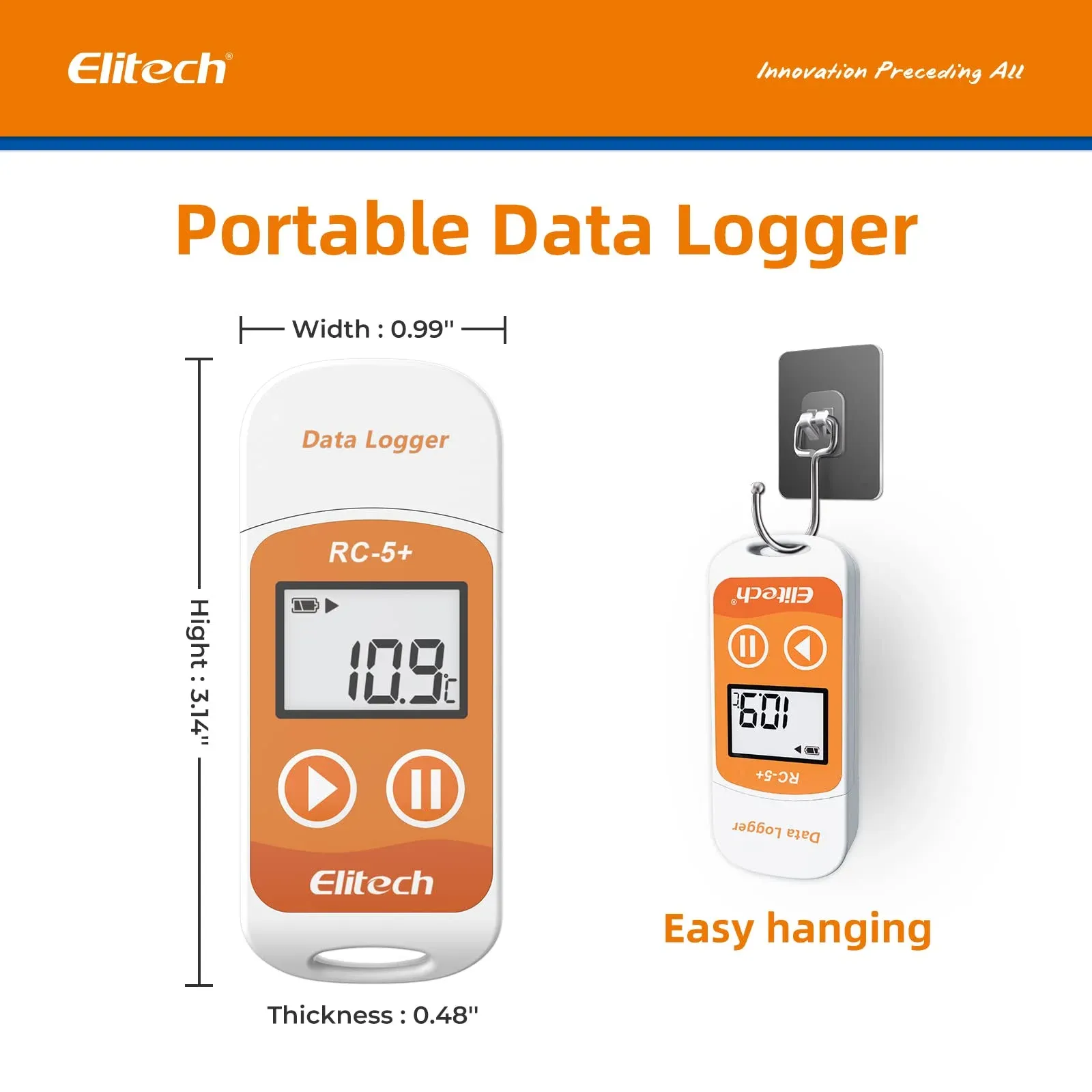
The Elitech RC-5+ is the unit I'd recommend for most UK businesses needing a reliable USB temperature recorder. At £99.99, it sits in a sweet spot between budget options and overpriced laboratory-grade equipment., a favourite among Britain’s tradespeople
Here's how it stacks up against the competition:
| Feature | Elitech RC-5+ (via elitechtem.co.uk) | Onset HOBO UX100 | Generic USB Loggers (Maplin-style) |
|---|---|---|---|
| Price | £99.99 | £120–£180 | £25–£50 |
| Memory Capacity | 32,000 readings | 84,000 readings | 8,000–16,000 readings |
| Accuracy | ±0.5°C | ±0.21°C | ±1.0°C |
| Output Formats | PDF + CSV (automatic) | CSV (software required) | PDF only (most models) |
| USB Plug-and-Play | Yes — no software needed | No — requires HOBOware | Varies |
| Reusable | Yes | Yes | Often single-use |
| Calibration Certificate | Included | Optional (extra cost) | Rarely available |
| Humidity Logging | Available (RC-5+TE model) | Yes (UX100-011) | No |
Look, the HOBO units are brilliant bits of kit — no argument there. But you're paying a premium for accuracy most businesses don't actually need. If you're running a pharmaceutical clean room, sure, go HOBO. For cold chain transport, food storage, warehouse monitoring? The Elitech gives you bang for your buck.
Why Plug-and-Play Matters
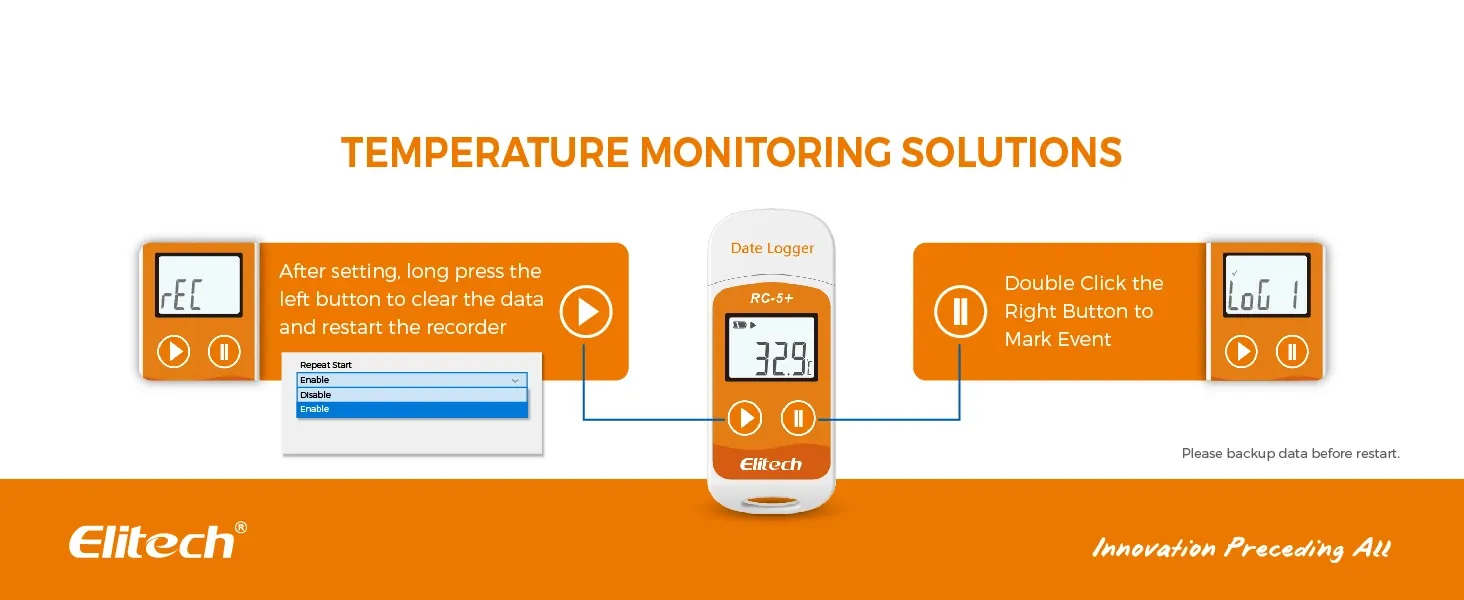
I can't stress this enough. The Elitech RC-5+ generates a PDF report automatically when you plug it into any computer. No drivers. No proprietary software. No IT department involvement. You pull it from your delivery van, plug it in, and hand the PDF straight to your compliance officer. Sorted.
The HOBO requires you to install HOBOware, which — fair enough — is decent software, but it's another step. Another licence. Another thing to go wrong when you're trying to pull data at 6am before the auditor arrives.
Cold Chain Compliance: Meeting UK Food Safety and Pharma Standards
UK cold chain regulations require continuous temperature monitoring with documented evidence. That's the non-negotiable bit. How you achieve it is where the choices come in.
The GOV.UK food safety guidelines specify that businesses transporting temperature-controlled foods must maintain records showing the cold chain wasn't broken. For chilled foods, that means staying at or below 8°C (with best practice being 5°C or lower). Frozen goods must remain at -18°C or below.
What Auditors Actually Want to See
Having sat through more than a few Environmental Health visits — both at my family's old place and helping mates with their businesses — I can tell you exactly what they're after:
- Continuous timestamped records — no gaps longer than your logging interval
- Calibration evidence — proof your logger reads accurately (the Elitech ships with a certificate)
- Alarm thresholds — evidence you'd know if temperature breached limits
- Exportable data — they want to take copies away with them
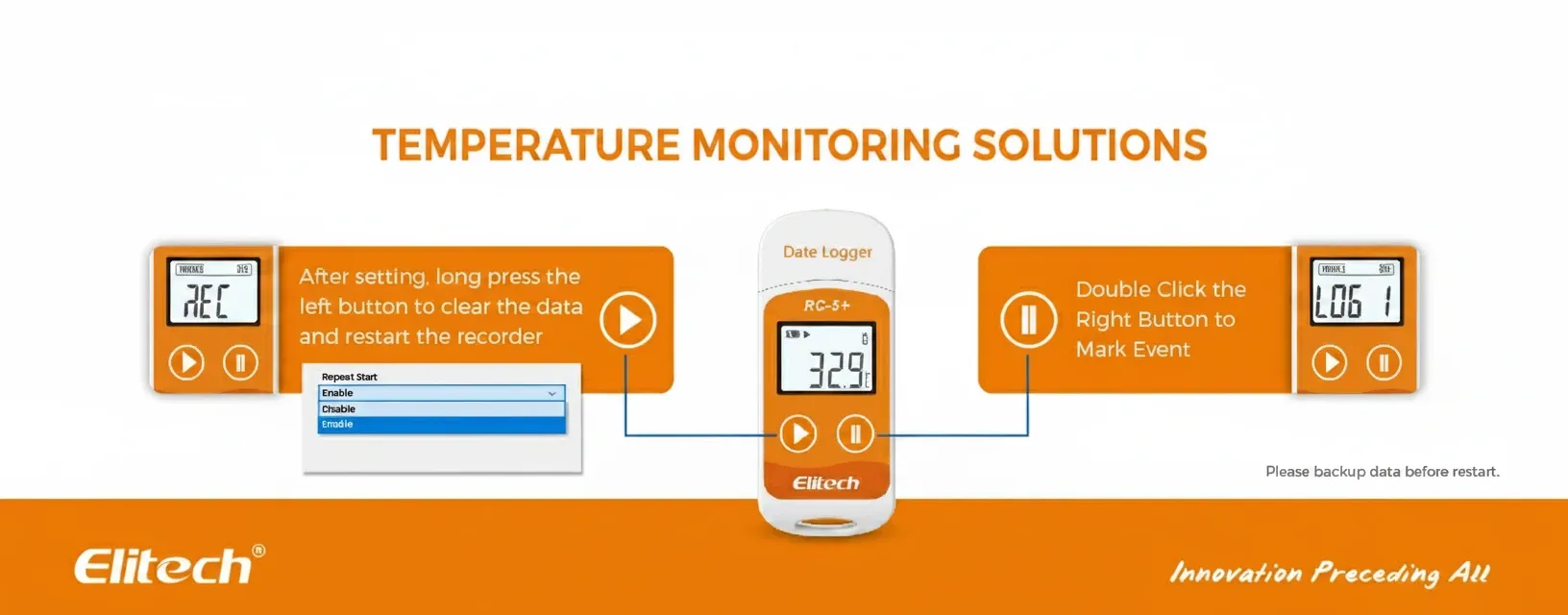
The Elitech RC-5+ ticks every box. Set your high/low alarm thresholds before deployment, and the PDF report flags any excursions automatically. Red highlights on the graph. Clear as day.
Pharmaceutical Cold Chain (GDP Compliance)
Pharma's stricter. The MHRA requires compliance with Good Distribution Practice, which means validated monitoring systems with documented accuracy. The ±0.5°C accuracy of the Elitech RC-5+ meets the requirements outlined in BSI's EN 12830 standard for temperature recorders in transport and storage.
For pharmaceutical applications, the RC-5+TE model with the external probe is the one to go for — it gives you more precise readings inside packaging without opening the container., meeting British quality expectations
Exporting CSV Files for Kaggle-Style Climate Analysis
Here's where things get properly interesting for the data nerds among us. A temperature data logger doesn't just prove compliance — it generates datasets you can actually analyse.
The Elitech RC-5+ exports directly to CSV format. Each row contains a timestamp and temperature reading (plus humidity if you're using the TE model). That's a clean, structured dataset ready for Excel, Python, R, or upload to platforms like Kaggle.
What You Can Do With Your Data
I've been playing with some of our temperature dataset CSV files recently, and the patterns are fascinating. You can spot:
- Seasonal drift in warehouse temperatures
- Door-opening patterns from delivery schedules
- HVAC failure precursors (gradual warming trends)
- Energy efficiency opportunities (overcooling during off-hours)
One logistics company I worked with discovered they were running their cold store 2°C colder than necessary overnight — costing them roughly £3,400 per year in wasted energy. Found it by analysing three months of CSV data from their Elitech loggers. Sometimes the most useful insight is hiding in the most boring-looking spreadsheet.
Building a Climate Dataset
If you're deploying multiple loggers across different locations, you're essentially building your own microclimate dataset. The daily temperature data from even a single site becomes valuable over time.
For those wanting to combine logger data with broader UK climate records, the temperature data CSV resources on our site provide formatting guidance to ensure compatibility with Met Office datasets and Kaggle competition formats.
Choosing the Right Temperature and Humidity Recorder for Your Application

Not every business needs the same spec. There's no catch — it's just about matching features to your actual requirements rather than over-specifying.
Food Transport and Storage
You need: reusable logger, PDF reports for auditors, ±0.5°C accuracy minimum, and ideally plug-and-play USB. The Elitech RC-5+ at £99.99 is spot on for this. Deploy it in your delivery vehicle, retrieve it at destination, plug in, done.
Pharmaceutical and Laboratory
You need: external probe capability, calibration certificate, ±0.5°C or better accuracy, and CSV export for record-keeping systems. The RC-5+TE model handles this. If you need ±0.2°C, you're looking at the HOBO range or dedicated lab instruments north of £200.
Warehouse and Facility Monitoring
You need: long battery life, large memory (32,000+ readings), configurable intervals, and alarm functionality. For a warehouse running 24/7, set your interval to 5 minutes and you'll get 111 days of continuous logging from a single deployment. That's a lot of data for not much outlay., popular across England
Research and Data Collection
You need: CSV export (non-negotiable), high memory capacity, and consistent formatting across multiple units. If you're building datasets for analysis, standardisation matters more than raw accuracy. Deploy identical units across all measurement points.
Match the tool to the job. Don't spend £180 on a HOBO for your chip shop freezer, but equally don't cheap out with a £30 single-use logger for your pharmaceutical cold chain.
Frequently Asked Questions
How accurate does a temperature data logger need to be for UK food safety compliance?
For UK food safety compliance, your logger needs ±0.5°C accuracy or better, as specified under EN 12830 standards. The Elitech RC-5+ meets this requirement at ±0.5°C. Budget loggers with ±1.0°C accuracy may not satisfy auditors, particularly for pharmaceutical or high-risk food applications where tighter tolerances apply.
Can I export Elitech data logger readings to CSV format?
Yes. The Elitech RC-5+ automatically generates both PDF and CSV files when connected via USB. No additional software is required — the device appears as a USB drive containing your report files. CSV exports include timestamp, temperature, humidity (where applicable), and alarm status columns, ready for Excel or data analysis tools.
How long does the battery last on a USB temperature recorder?
The Elitech RC-5+ uses a replaceable CR2032 lithium battery lasting approximately 2 years under normal use (logging at 15-minute intervals). At more frequent intervals like every 60 seconds, expect 8–12 months. The device displays a low-battery indicator on its LCD screen, giving you advance warning before it stops recording.
What's the difference between the Elitech RC-5+ and RC-5+TE models?
The RC-5+TE includes an external temperature probe on a cable, allowing you to measure inside sealed containers, fridges, or packaging without opening them. The standard RC-5+ uses an internal sensor measuring ambient air temperature only. Both share the same 32,000-point memory, ±0.5°C accuracy, and USB plug-and-play functionality. Choose the TE model for pharmaceutical or sealed-environment monitoring.
Do I need calibration certificates for my temperature loggers?
For regulated industries — yes. MHRA pharmaceutical audits and BRC food safety certifications both require traceable calibration evidence. The Elitech RC-5+ ships with a calibration certificate included at no extra cost. Recalibration is recommended annually, though some industries require every 6 months. Without valid calibration documentation, your logged data may be rejected during compliance audits.
Can temperature logger data be used for climate research or Kaggle datasets?
Absolutely. CSV exports from devices like the Elitech RC-5+ produce clean, structured datasets suitable for data science platforms including Kaggle. With 32,000 data points per deployment and standardised timestamp formatting, you can build substantial microclimate datasets. Multiple loggers across different locations create multi-variable environmental datasets ideal for machine learning projects and trend analysis.
Key Takeaways
- The Elitech RC-5+ at £99.99 offers the best balance of accuracy (±0.5°C), capacity (32,000 readings), and ease of use (plug-and-play USB with automatic PDF/CSV generation) for UK businesses.
- UK cold chain compliance requires continuous, timestamped, exportable records — paper charts and manual checks won't satisfy modern auditors or HACCP requirements.
- Plug-and-play USB matters more than you'd think — eliminating software dependencies reduces failure points and speeds up data retrieval during time-pressured audits.
- CSV export transforms compliance data into business intelligence — analyse energy waste, predict equipment failures, and build climate datasets from the same hardware.
- Calibration certificates should be included, not optional extras — the Elitech ships with one; competitors often charge £30–£50 additionally.
- Match your logger to your application — ±0.5°C suits food and most pharma; only specialist laboratory work demands ±0.2°C or better at double the price.
- 32,000 readings at 3-minute intervals gives you 66 days of continuous monitoring from a single deployment — more than enough for most transport and storage cycles.
Ready to upgrade your compliance with {brand_name}?
Explore Solutions — £45.47