In-Transit Temperature Logging: UK Best Practices
Short answer: good in-transit temperature logging means placing a certified logger with the goods (not against an ice pack), setting a sensible interval, checking calibration, and exporting a PDF/CSV record on arrival. Done consistently, it turns every delivery into defensible proof.
For a chilled-food supplier the driver behind all of this is commercial: a customer wants evidence the load stayed cold, and if a delivery is disputed you must be able to show it was not a transport failure. Best practice is simply the routine that makes that record trustworthy every time.
In-transit logging best practices at a glance
- Place the logger with the product, at product level — not taped to the wall or on an ice pack.
- Set the interval to the journey: every 10–15 minutes for typical runs.
- Start in a stable environment and note the serial against the dispatch.
- Export PDF and CSV on arrival and file them against the consignment.
What are the UK requirements?
Chilled high-risk food must be kept at or below 8°C, and your HACCP procedures must be backed by records. EN 12830:2018 is the recorder standard for temperature-sensitive transport, so a certified logger is the sensible default for loads that may be audited or challenged.
USB or real-time: which logger for transit?
Real-time loggers alert you mid-journey but need connectivity and a subscription. For most chilled distribution, disputes are resolved from the record after delivery, so a standalone USB logger that drops in the box and exports on arrival is enough — and it means you can afford one in every consignment rather than a token few.
Placement and set-up that stand up
- Position with the goods. The regulation is about the temperature of the food, not the air, so log where the product is, not the coldest or warmest corner.
- Choose the interval. Every 10–15 minutes gives enough resolution to show a door-open blip versus a real breach without exhausting memory.
- Check calibration. A quick ice-point check (0°C) before a critical run confirms the reading you will rely on.
- Record identifiers. Note the logger serial on the dispatch note so the file ties to the exact consignment.
Turning the run into evidence
On arrival, stop the logger and export both files. The PDF is what you hand a customer or auditor; the CSV lets you investigate a trend. Filed against the consignment reference, the pair answers the only question that matters in a dispute: was the load in range, and if not, when and for how long?
A logger set up for in-transit proof
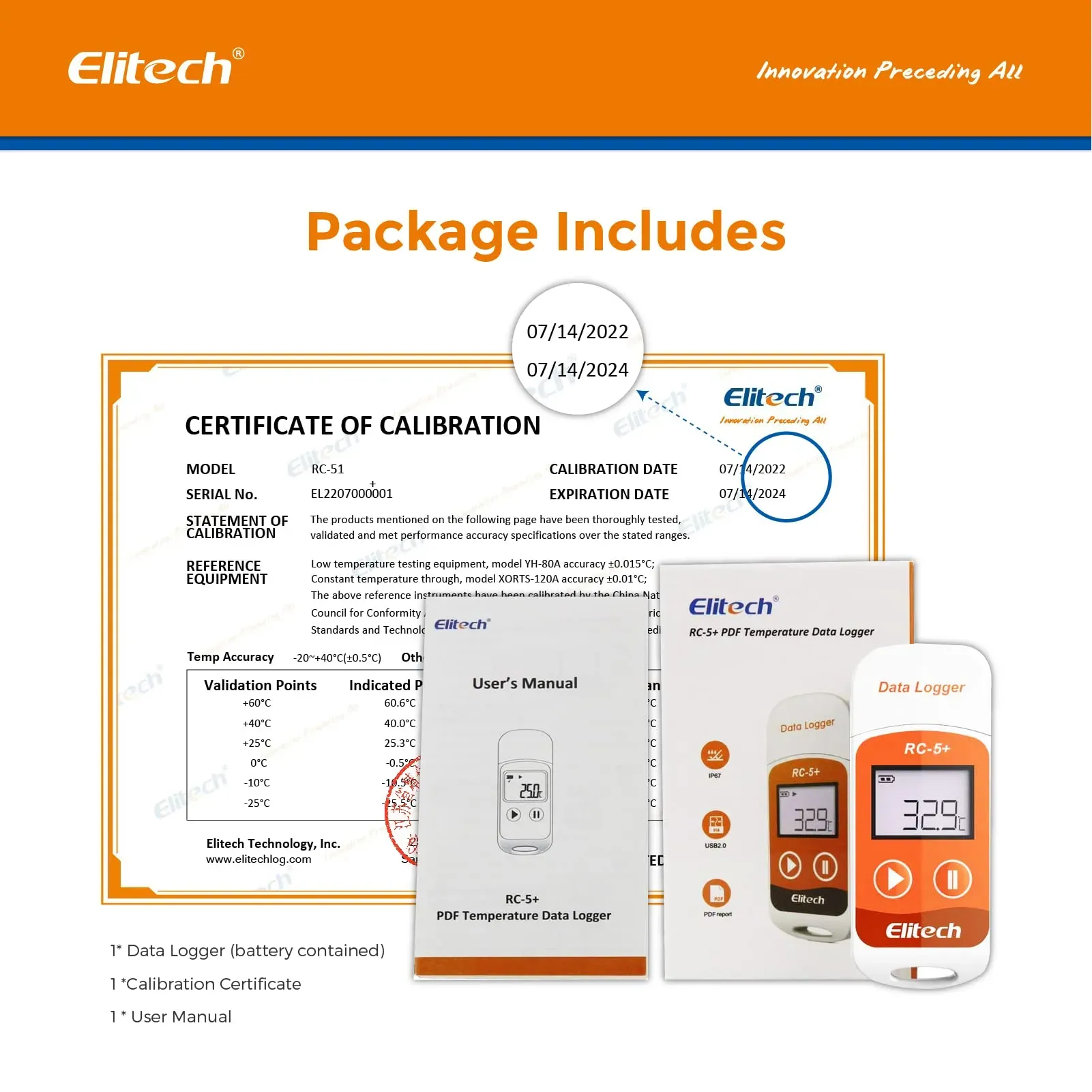
If you want every consignment to carry its own proof, a certified standalone logger that exports on arrival is the workhorse. The Elitech RC-5+ USB Temperature Data Logger is sold as a 5-pack for £45.47 with free UK delivery. It is EN12830 certified, accurate to ±0.5°C between -20°C and +40°C (±1.0°C outside that band), stores 32,000 readings, and lets you set a logging interval from 10 seconds to 24 hours. On arrival you plug it into any computer and it generates a PDF and CSV report automatically, with no software to install, and the user-replaceable CR2032 battery lasts around six months. It is CE/RoHS marked and comes with 30-day returns and a 12-month UK warranty.
Put defensible proof in every consignment
View the Elitech 5-pack — £45.47Frequently asked questions
What are in-transit temperature logging best practices?
Place a certified logger with the product at product level, set an interval of about 10-15 minutes, do a quick ice-point calibration check before critical runs, note the logger serial on the dispatch, and export a PDF and CSV on arrival filed against the consignment.
What are the UK requirements for in-transit temperature logging?
Chilled high-risk food must be kept at or below 8°C and your HACCP procedures must be backed by records. Using an EN 12830:2018-certified recorder is the sensible default so the record is accepted by customers, contracts and auditors.
Should I use a USB or a real-time logger for transport?
Real-time units alert you mid-journey but need connectivity and a subscription. For most chilled distribution, disputes are settled from the record after delivery, so a standalone USB logger that exports on arrival is enough and far cheaper to deploy in every load.
Where should the logger be placed in a load?
With the goods, at product level, because the rule concerns the temperature of the food rather than the air. Avoid taping it to a wall or resting it on an ice pack, which would misrepresent what the product experienced.